
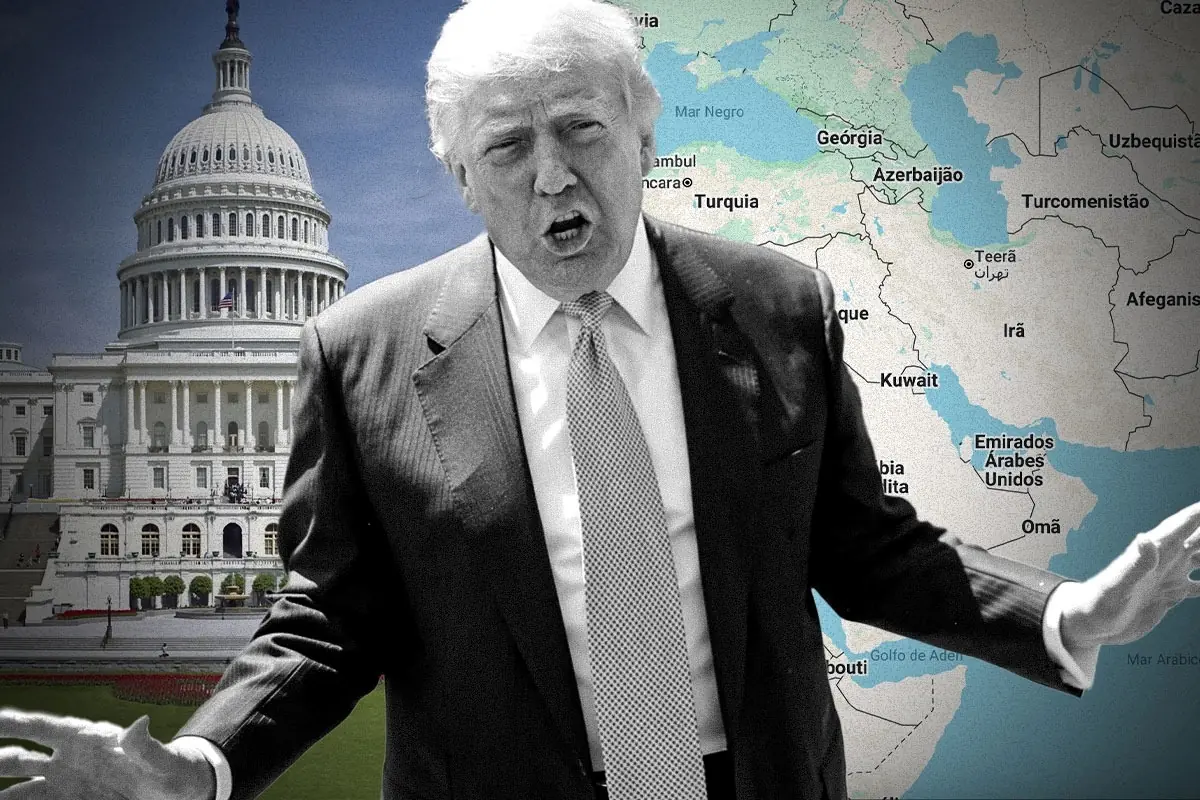
Democratic victories in the 2026 midterm elections are expected to give Congress greater power to scrutinize President Donald Trump’s foreign policy and defense spending. (Foto: Instagram)
Democrats’ victory in the U.S. midterm elections is expected to create new obstacles for President Donald Trump’s foreign policy. After regaining control of the House and Senate, they will have tools to scrutinize White House decisions, question military operations and influence approval of funding for conflicts. The shift, set to take effect in January 2027, will bring divided government to Trump’s second term. He will retain responsibility for foreign policy and command of the armed forces, but will face an opposition-controlled Congress less inclined to support his administration.
The disputes could involve the war with Iran, military aid to Israel and Ukraine, and U.S. pressure on countries in Latin America. How much the new majority changes policy will depend on whether Democrats use their congressional powers: They can complicate parts of Trump’s international agenda, but cannot automatically override executive decisions. Leo Braga, an international relations professor at Faculdade Presbiteriana Mackenzie Rio, said the central change would be greater negotiation between the branches of government, not an easy path for Democrats. Fernanda Brandão, a professor in the same program, said voter frustration with the Republican administration and the effects of its policies on household costs helped drive the Democratic gains.
Cost-of-living concerns, inflation and rising fuel prices converged with opposition to immigration operations and U.S. involvement in international conflicts. The war with Iran, in particular, brought together concerns about the economic costs of presidential decisions and the government’s priorities. The military offensive began in February 2026 and has had economic and political repercussions in the United States, including higher fuel prices and increased public spending. The conflict also became a source of electoral damage for Republicans.
With majorities in both chambers, Democrats can challenge the continuation of military operations, summon officials to answer questions and press for more transparency about costs and military objectives. Congress also controls approval of the federal budget, giving lawmakers leverage over defense funding. Braga said limiting the defense budget could restrict money for producing missiles, deploying troops and supplying fleet ships with fuel. Fernanda Medeiros, an international relations professor at Centro Universitário de Brasília, also identified the budget as a key pressure point. She said Congress could shift from routinely endorsing White House actions to investigating issues including tariffs, political interference in other countries and the war with Iran.
The new Congress is also expected to scrutinize military assistance to Israel, one of the largest recipients of U.S. aid. Continued funding could face questions from Democrats who oppose what they view as unconditional support for Prime Minister Benjamin Netanyahu’s government. Trump has said he intends to cut funding to the Israeli government. On Ukraine, the Democratic victory could increase pressure on Trump to maintain military and financial support for Kyiv and sanctions on Moscow. Since the start of his second term, Trump has reduced U.S. involvement in the war and pressed Volodymyr Zelensky to consider territorial concessions to Russia. Braga said the new Congress could improve Kyiv’s negotiating position by making it harder to reduce funds for Ukraine’s defense.
In Latin America, lawmakers may increase scrutiny of U.S. sanctions, diplomatic pressure and security operations. Secretary of State Marco Rubio, a leading figure in Washington’s policy toward the region, could face more frequent congressional questions. Medeiros said investigations could examine decisions by the Trump administration, noting that Democratic lawmakers had previously sought answers from the U.S. government about possible interference in Brazil’s elections. No immediate change in U.S.-Brazil relations is expected, but Braga said the election results could strengthen Brasília’s diplomatic leverage as Trump negotiates with a more powerful opposition. He also said that Luiz Inácio Lula da Silva’s expected four more years in office could affect the bilateral dynamic, while Trump would have only two years remaining in his term beginning in 2027.