
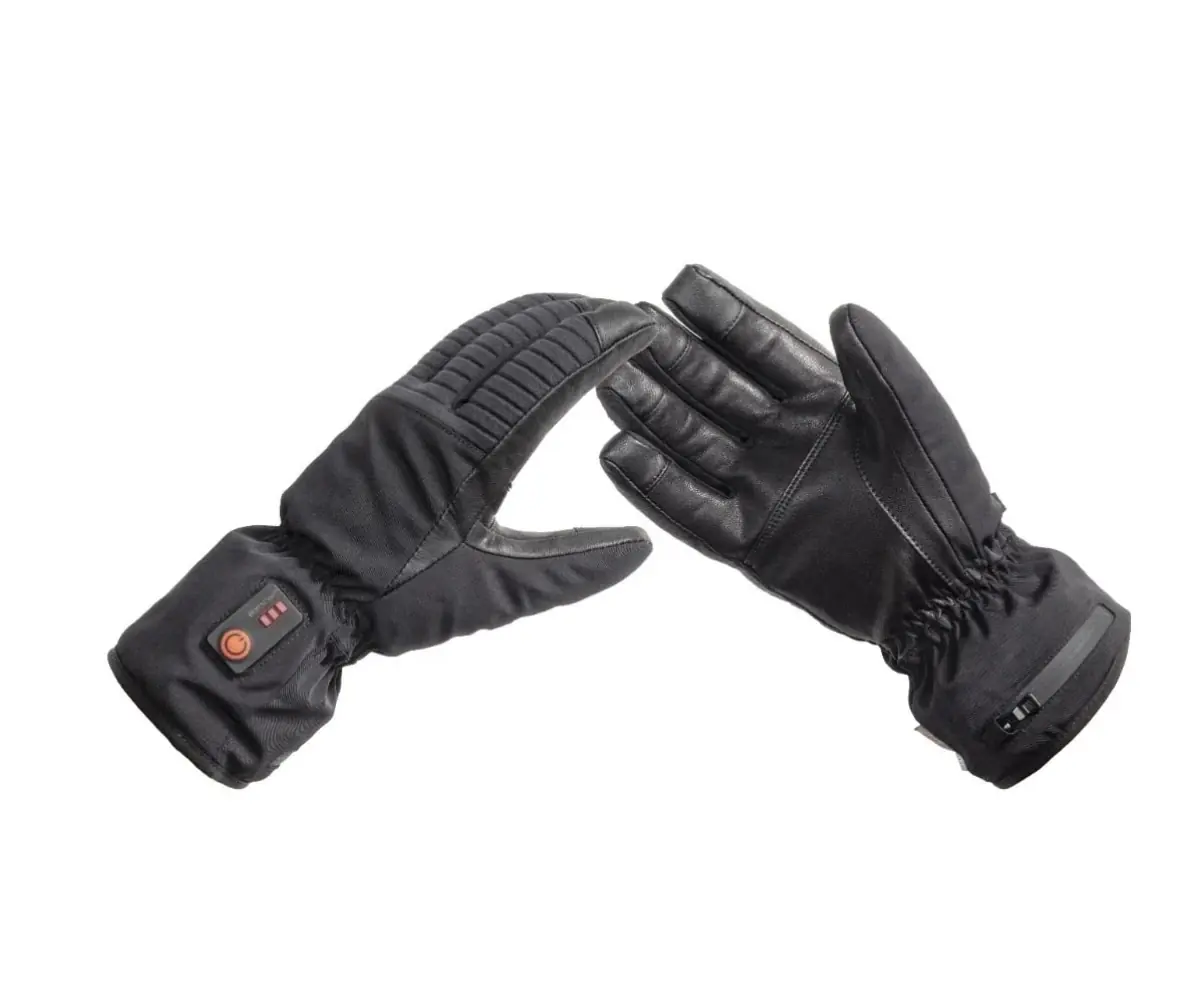
 You want warm hands *without* constantly noticing where the battery sits while you’re wearing them. You’ll feel it most at three moments: when you pull your sleeve over the glove, when you bend your wrist (driving, walking, working), and when you want to turn the heat up or down. The battery position determines whether the glove just “sits right” and lets you move freely. If you’re looking at heated gloves, you’ll usually end up with two options: a battery in the cuff or a battery on/against the wrist.
First, the pitfall: warmth only feels good when wind and moisture are under control
Don’t fixate on “how warm” a glove can get. Warmth only feels genuinely comfortable when wind and moisture stay out. If cold air leaks in past your wrist or the inside gets clammy quickly, the heat often feels less even—like the back of your hand is fine while your fingertips lag behind.
So first, check the basics in real use: does the cuff seal neatly around your wrist/forearm, is there no gap between cuff and jacket, and does the inside stay pleasantly dry? Only when that’s right will you really notice the difference between a battery in the cuff versus on the wrist.
Battery in the cuff: calmer around your wrist, but watch sleeve space
With a battery in the cuff, the “block” sits more toward your forearm. That often feels calmer around your wrist: when you bend it, there’s less chance something presses right on your wrist bone, and you’re less likely to feel a hard edge. Nice if you do a lot of steering, hold poles, or repeat the same wrist movement often.
What to watch for: the battery can make the cuff feel thicker or longer. You’ll notice immediately whether your sleeve slides over it smoothly, or whether it starts to feel bulky around your forearm. If your jacket has enough room at the wrist/forearm, this type often feels stable and relaxed.
This usually suits you if you’re quick to notice pressure points around your wrist, or if you prefer to keep the wrist area as “free” as possible.
Battery on the wrist: quick access to controls, but you’ll notice it sooner
A battery on or against the wrist is often very practical: the controls are right where you expect them, so you can switch a level up or down quickly. You’ll also notice sooner whether the closure is secure, because everything comes together in one spot.
At the same time, you’ll feel this placement sooner when you bend your wrist. If the battery sits right on the wrist bone or on the bend point, it can create a pressure spot over time or slightly limit your range of motion. If you wear a watch, you’ll also find out immediately whether the combination is still comfortable. Some models place the battery just outside the bend point so your wrist can move more freely.
So wrist placement can be a good fit if you mainly want fast control and your sleeves are roomy enough.
How to keep it simple in real life
You don’t need to overthink this: a few movements quickly show which battery position feels most relaxed for you. Focus on: sleeve slides smoothly, wrist stays free, controls are easy without hassle.
– With your jacket on: does your sleeve slide smoothly over the glove, or does it feel thick and “bulky” around the cuff?
– Make a fist and stretch again: do you feel a pressure point on your wrist bone, or does it stay evenly comfortable?
– A “steering motion”: does your wrist bend freely, or does the bend point get in the way sooner?
– Use the controls with your sleeve the way you wear it outdoors: can you reach them without constantly pulling your sleeve back?
– After a few minutes: do your fingertips stay warm when wind and moisture are well controlled? If not, a better-sealing cuff and a drier interior often help a lot already.
Still unsure? Choose the model you notice the least: no pressure point, your sleeve stays smooth, and the controls remain logically within reach. Outdoors, that usually feels the most relaxed too.