
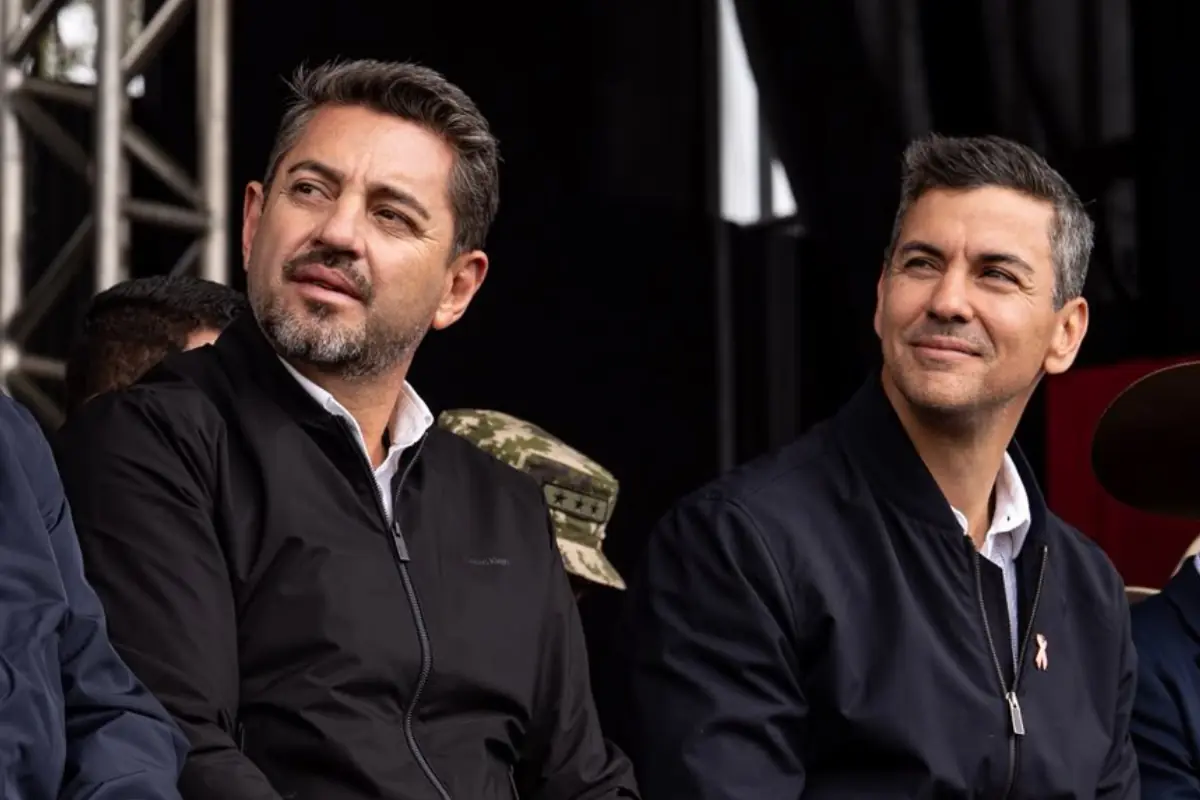
Paraguay’s Congress is expected to swear in Vice President Pedro Alliana as president after Santiago Peña’s resignation. (Foto: Instagram)
Paraguay’s Congress is expected to swear in Vice President Pedro Alliana as the country’s new head of state at 6 p.m. Thursday, Nov. 5, following President Santiago Peña’s resignation. Raúl Latorre, president of the Chamber of Deputies, announced the schedule. Lawmakers are expected to select a new vice president at 7 p.m., after Alliana’s swearing-in.
Earlier Thursday, the Chamber of Deputies rejected an impeachment request against Alliana, who was also facing an effort to remove him from office. The decision cleared the way for him to take over the executive branch. Peña’s resignation came amid a political and banking crisis involving Banco Ueno. The conservative president was facing an impeachment process backed by the opposition and members of his own governing coalition, leaving him politically isolated.
Peña was accused of being complicit in alleged irregularities involving the financial institution, which is controlled by a group in which he had previously been a shareholder. The crisis escalated Tuesday, Nov. 3, when the Central Bank of Paraguay intervened in Banco Ueno and suspended its operations. In a video released Thursday, Peña apologized to Paraguayans who had lost access to their money and said he had decided to resign to protect national stability.
“I am convinced that no position can be more important than Paraguay’s well-being. I also want to apologize to the people. If I failed at any point, it was never my intention to disappoint the trust you placed in me,” Peña said.
The central bank intervened after finding that Banco Ueno’s solvency ratio was below the required minimum of 50%. The measure left nearly 3 million customers without access to banking services in a country with about 6.1 million people. It led to long lines at branches, concern among account holders and street protests. More than half of Paraguay’s adult population uses the bank, which holds about $850 million in public deposits, including funds belonging to the Social Security Institute.
The Central Bank said the situation was an isolated case and did not signal widespread problems in Paraguay’s financial system. It also said protecting depositors was a priority. The turmoil reached the regulator’s leadership as well: Central Bank President Carlos Carvallo resigned on the day of the intervention. Before leading the central bank, Carvallo had headed Financiera Ueno, the company that gave rise to Banco Ueno.