
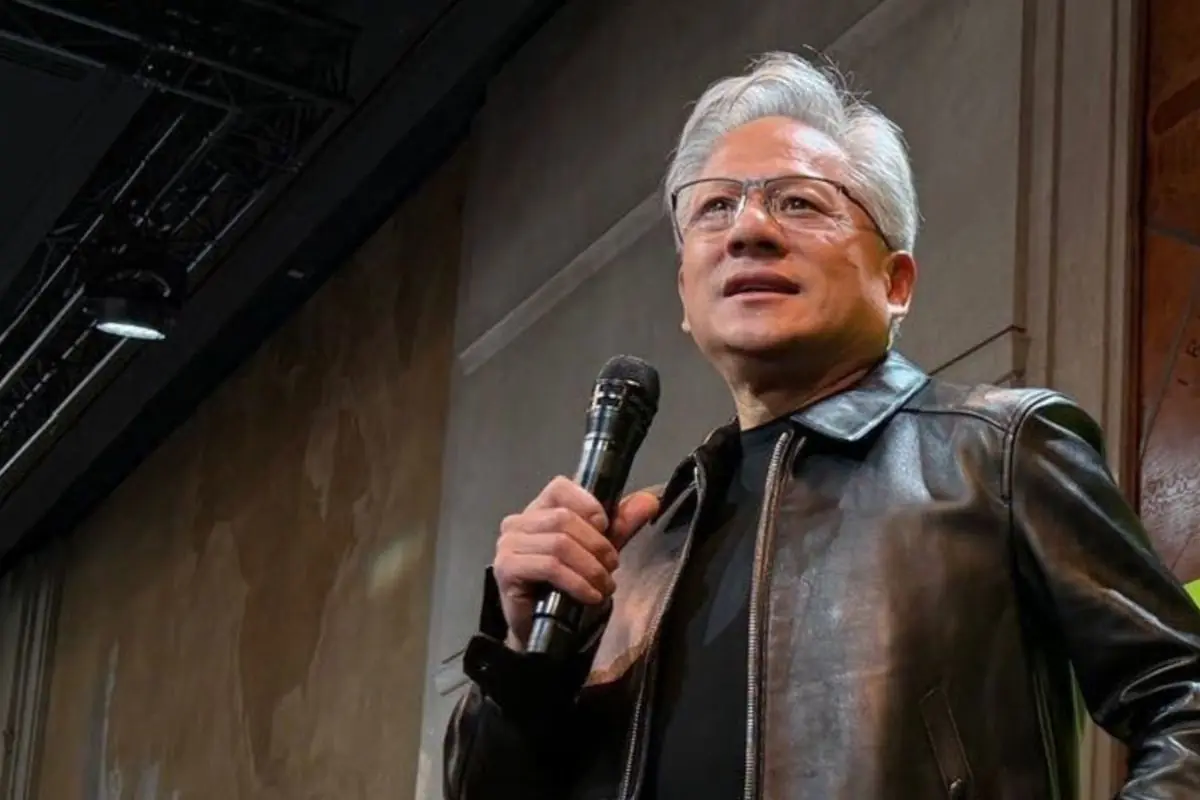
Nvidia’s board is weighing CEO Jensen Huang’s future as personal-life allegations and national security concerns put pressure on the company’s leadership. (Foto: Instagram)
Nvidia’s board met Wednesday, Nov. 11, to consider whether Jensen Huang should remain CEO, as allegations about his personal life and concerns involving possible national security risks put pressure on the company’s leadership. Nvidia is one of the world’s largest chipmakers and a major force in the expansion of artificial intelligence.
The scrutiny intensified after The New York Times reported that Huang had a new extramarital relationship with Kimberly Powell, president of Nvidia’s health care division. The newspaper reported that the two were seen in an intimate situation at a San Jose, California, hotel during a company conference in March. Huang had previously acknowledged being unfaithful to his wife in a message to employees. He has denied knowing of any possible connection between Alice Huang, a businesswoman with whom he was reported to have had a relationship, and the Chinese government. Alice Huang is under investigation over suspicions that she acted as an intelligence agent for Beijing.
The allegations have affected Nvidia’s stock. After reports that the company was preparing to remove Huang, shares fell more than 8% in after-hours trading. If the losses hold, Nvidia may have shed approximately $685 billion in market value since the company announced an internal investigation into Huang’s relationship with the businesswoman. The figure is conditional, and the reported decline had not been confirmed as final.
Under Nvidia’s internal rules, a majority vote of its 11-member board can remove the CEO. Independent directors hired the law firm Wachtell, Lipton, Rosen & Katz this week to conduct what was described as an independent and comprehensive investigation. Nvidia expressed confidence in Huang’s leadership on Sunday, Nov. 8, but additional information has heightened pressure over his future. The company had not issued an official statement on a possible departure.
Huang’s potential exit would pose a challenge for Nvidia, which he founded in 1993. The company’s chips are used to train AI models and support operations at major technology companies, including OpenAI, Anthropic and Google. Nvidia’s market value exceeds $4 trillion, and the company has no obvious successor for Huang, who has substantial influence over strategy and product development. He owns approximately 3.6% of Nvidia’s shares.
President Donald Trump voiced support for Huang, saying he had done an extraordinary job leading the company. Elon Musk was among other prominent figures in the technology sector who expressed solidarity with the CEO. Separately, Democratic Sens. Elizabeth Warren and Chris Coons asked the Trump administration to preserve documents related to Nvidia chip exports to China. The senators said the episode raises concerns about enforcement of trade restrictions and protection of U.S. national security. The turmoil comes shortly before Nvidia is scheduled to release financial results on Nov. 17, as the company holds a central position in the technology competition between the United States and China.