
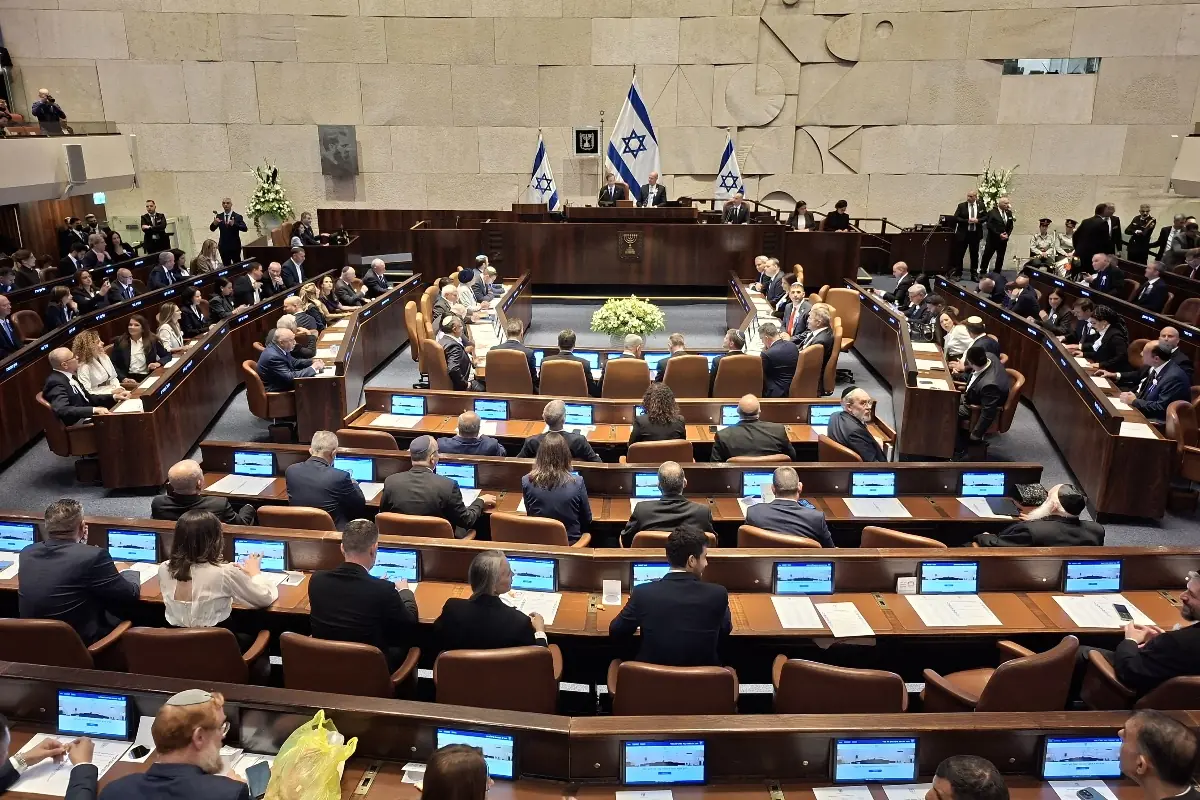
Israel’s newly elected lawmakers took their seats in the Knesset on Nov. 10, as Gadi Eisenkot sought support to form a government. (Foto: Instagram)
Israel’s 120 newly elected lawmakers took their seats in the Knesset on Tuesday, Nov. 10, with no new prime minister yet determined. Former Israel Defense Forces general Gadi Eisenkot was the leading candidate to form a government, but he would need support from at least 61 lawmakers.
President Isaac Herzog selected Eisenkot on Sunday, Nov. 8, to try to form the next government. Eisenkot leads the Zionist opposition to Benjamin Netanyahu. In the election, Netanyahu’s bloc won 53 seats, the opposition led by Eisenkot won 48, and Arab parties secured 19. Eisenkot would need support from lawmakers in Arab parties to reach a majority.
In an address to the Knesset, Netanyahu called for a “national unity” government and accused the Arab parties Ra’am and the Joint List of seeking Israel’s destruction. He also repeated his claim that Iran is pursuing nuclear weapons that threaten Israel’s existence. “In the face of these threats, we must do one thing in this house: set aside all other considerations and establish a national unity government,” Netanyahu said.
Eisenkot responded on social media, describing Netanyahu’s speech as “full of hate” and “divisive.” He said the address had further convinced him that Netanyahu was not fit to remain in office. Eisenkot called for urgent action to form a national emergency government, saying Netanyahu’s continued leadership divides Israel and endangers its security.